
API Development & Integration.
Secure, documented connections that let your systems, partners and customers exchange data automatically.
- Secure Connectivity
- Partner Integration
- Scalable Architecture
- Real-Time Monitoring

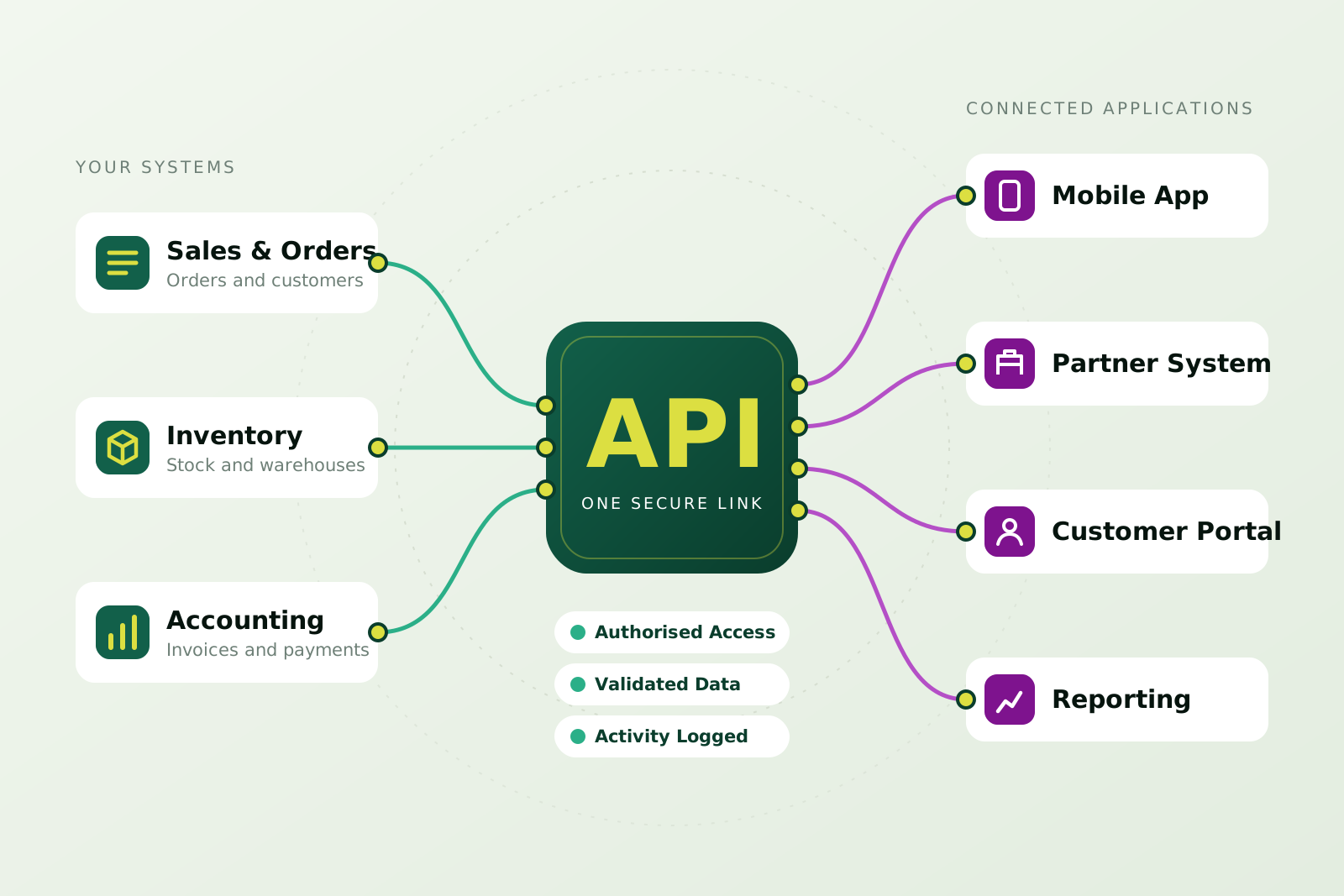
Connected Applications
- Mobile App
- Partner System
- Customer Portal
- Reporting
Connection Health
- Availability healthy
- Access control enforced
- Activity log recording
Connections Built to Last.
Every connection is secured, documented and monitored, so the next system connects without a new project.
-
API Design & Development Clean, consistent connections designed for long-term use.
-
Secure Access Control Only authorised systems and partners can connect.
-
Real-Time Notifications Connected systems notified the moment data changes.
-
Usage Management No single consumer can degrade performance for others.
-
Data Validation Incorrect data is rejected before it enters your system.
-
Developer Documentation Clear guides so partners connect without relying on your team.
-
Test Environment Partners build and test safely, away from live data.
-
Performance Monitoring Usage, speed and errors tracked continuously.
Structured API Development Methodology.
An API is a long-term commitment, so it is designed carefully before it is built.





-
STEP 01
Requirements Modelling
Designed around what the connecting systems require.
-
STEP 02
Interface Agreement
Data formats and change policy are agreed before development.
-
STEP 03
Secure Development
Built with security and usage controls from the start.
-
STEP 04
Documentation & Testing
Released with clear documentation and a test environment.
-
STEP 05
Continuous Support
Updated in planned stages, with notice to everyone connected.
The Business Impact of Disconnected Systems.
Without a standard way to connect, every new integration becomes a costly custom project.
- Agility New systems connect through a documented API. Expansion without a rebuild each time.
- Partnerships Customers and partners integrate directly. No manual handling by your team.
- Data Ownership Your data retrievable through your own API. Never locked behind an export.
- Reliability Data contracts validated at the point of entry. Invalid data is rejected before it reaches your systems.
- Visibility Usage and errors monitored continuously. Issues are visible before users report them.
- Longevity API versions managed deliberately. Changes ship without breaking existing connections.
- Process & Compliance Access controlled by key, permission and log. Data is shared without losing control of it.
- Maximized Performance Published API documentation and continuous monitoring. Performance is measured, maintained and improved.
The cost of an API is paid once. The cost of not having one is paid again with every new integration.
Book a Free ConsultationFrequently Asked Questions.
What is an API?
An API is a secure interface that allows two software systems to exchange data automatically. It is the standard method for connecting business systems.
Can you build an API for a system we already have?
In most cases, yes. Where the system cannot be modified directly, the interface is built alongside it.
Is it secure?
Yes. Every connection is authenticated, encrypted and logged, and each party can access only the data it is authorised to see.