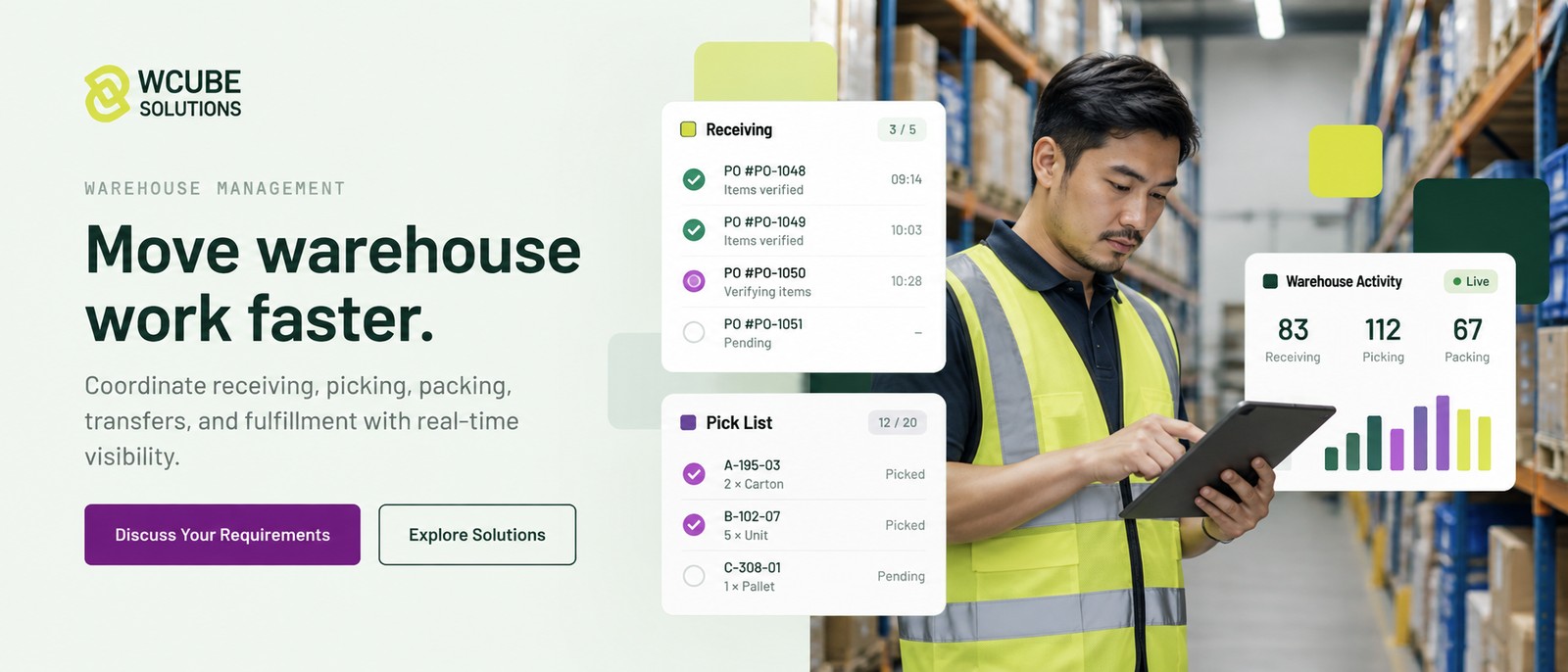
Warehouse Management System.
Scan-verified control of every stock movement, from receiving to proof of delivery, synchronised with your ERP. One warehouse or a multi-site network.
- Barcode & QR
- FEFO
- Serial tracking
- Cycle counting
- Multi-site
End-to-End Inventory Control.
Every stock movement controlled and recorded, from inbound receipt to signed delivery, across one site or many.
Inbound Goods Receipt.
- Goods receipt against PODeliveries reconciled line by line on arrival. Shortages are identified at receiving, not at month-end.
- Barcode label printingLabels printed and applied at receiving. Every carton and pallet is individually identifiable.
- Guided put-awayThe system assigns the storage location. Put-away follows a defined rule, not individual judgement.
Bin-Level Location Control.
- Bin & bay location trackingExact rack, bay and level recorded for every unit.
- Batch, lot & expiry (FEFO)First-expiry-first-out enforced at picking. Expiry write-offs are prevented at source.
- Serial number trackingEach unit traceable from receipt to the customer who received it.
Zero-Downtime Cycle Counting.
- Cycle counting without shutdownZones are counted during live operations. No operating days are lost to stocktakes.
- Real-time stock levelsSystem stock matches physical stock, updated with every movement.
- Variance reviewVariances routed for approval, supported by the full count history.
Scan-Verified Order Picking.
- Scan-verified pickingEvery pick confirmed by scan. Mis-picks are blocked at the point of picking.
- Optimised pick pathsPicks sequenced by location to minimise travel per order.
- Batch & wave pickingOrders consolidated into a single pick run when volume justifies it.
Dispatch & Proof of Delivery.
- Packing & dispatch confirmationA single confirmation updates the ERP, the customer portal and the invoice queue.
- Proof of deliverySignature and photo captured on the driver’s mobile device. Invoicing proceeds on confirmed delivery.
- Customer-facing delivery statusDelivery status published to customers, reducing inbound enquiries.
Multi-Warehouse Consolidation.
- Stock by site, in one viewStock across every location in one consolidated view. No separate systems to reconcile.
- Inter-branch transfersTransfers raised, dispatched and received in the system, with stock visible in transit.
- Consolidated reportingReported across all sites, or filtered to one.
Device-Level Hardware Integration.
The system integrates directly with the scanners and printers you already operate. Where equipment is required, WCube can specify and supply it. New hardware is not a prerequisite.
-
Barcode scanners 1D, 2D, handheld, wearable
-
Label printers ZPL, EPL, print-and-apply
-
Mobile terminals Rugged Android, vehicle-mount
-
RF & Wi-Fi Coverage to the racking face
-
Weighing scales Serial and TCP interfaces
-
RFID EPC Gen2, portal and handheld
-
CCTV & access control Linked to stock movement
-
Your existing devices Assessed and reused
The Operational Cost of Manual Warehouse Management.
Labour hours, downtime and working capital absorbed by processes still running on paper and spreadsheets.
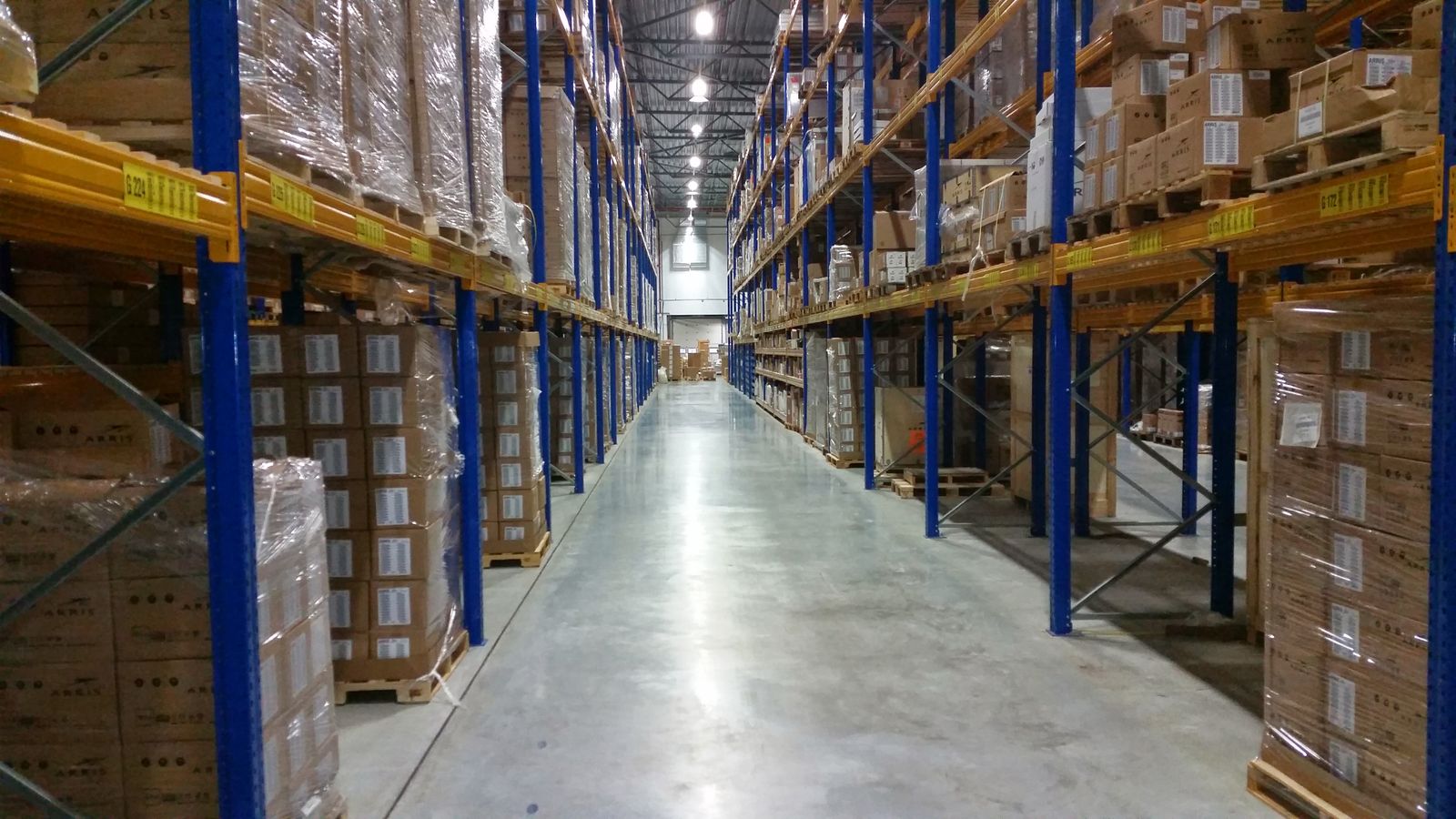
- Less Manual Work Scanner-based cycle counts post directly to inventory. No second count and no encoding of tally sheets.
- Zero Downtime Rolling cycle counts run by zone during live operations. No zone closures and no weekend stocktakes.
- Faster Collections Invoices generate from confirmed delivery records. Billing goes out the day goods are delivered.
- Inventory Accuracy Every item tracked to bay level with a full movement log. Stock disputes are resolved from the record.
- Faster Onboarding Guided scan-and-confirm workflows on every task. New staff work to standard from the first shift.
- Customer Self-Service Clients view stock and order status online. Inbound status calls are removed from your team’s workload.
- Process & Compliance Receiving, put-away and dispatch standardised and enforced by the system. Process gaps and compliance risks stop slowing the warehouse.
- Maximized Performance Documented procedures and live monitoring of every movement. Performance is measured, maintained and improved.
Movement history that is not captured today cannot be reconstructed later. Operational reporting, audit and demand forecasting all depend on it.
Book a Free ConsultationFrequently Asked Questions.
What is a warehouse management system?
A warehouse management system (WMS) is software that tracks stock by exact location and controls warehouse operations: receiving, put-away, picking, counting and dispatch. Unlike an inventory list, it records where each unit is stored and every movement it makes, not only the quantity on hand.
What is the difference between a WMS and an ERP?
An ERP is the system of record for stock value, orders and finance. A WMS controls the physical handling of that stock inside the warehouse, including bin locations, scan-verified picking and cycle counts. Most operations run both. The WMS manages floor execution and passes confirmed movements back to the ERP.
Do we need a WMS if we already have an ERP?
Yes, if your ERP reports how much stock exists but not where it is located. A WMS closes that gap. It runs alongside the ERP and does not replace it, so existing finance and reporting remain unchanged.
How long does a WMS implementation take?
The timeline depends on two factors: the number of systems the WMS must exchange data with, and how well the current process is documented. These drive the schedule more than warehouse size. Every project begins with a requirements assessment, which produces a realistic schedule.
Can a warehouse management system integrate with SAP or our accounting software?
Yes. Integration runs through the interfaces those platforms already provide, including IDoc, OData, REST, webhooks, SFTP and scheduled file exchange. No modification to the ERP or accounting platform is required.
What is FEFO, and when does it matter?
FEFO means first-expiry-first-out. Stock is picked in order of expiry date, not arrival date. It applies wherever goods expire or degrade, such as food, pharmaceuticals, chemicals and cosmetics. Enforcing it at picking prevents expiry write-offs.